Most people pick a Claude model the wrong way. They open the dropdown, see Fable 5.1 at the top, and assume bigger means better. So they pay 5x more per query for tasks Sonnet would have nailed, and they still publish work with errors that any second model would have caught.
On April 9, 2026, Anthropic shipped a feature called the Advisor Strategy. The mechanics are clever, but the message is what matters. Anthropic itself just admitted that no single Claude model is the right answer for any real task. This guide explains what that means for writers and B2B content teams who use Claude every day. It also covers the gap that picking the right model still leaves on the page.
The 'best model' trap
The way Claude is sold pushes one story: pick the smartest one, ask your question, trust the answer. This is wrong in two ways.
AI models are spiky, not balanced
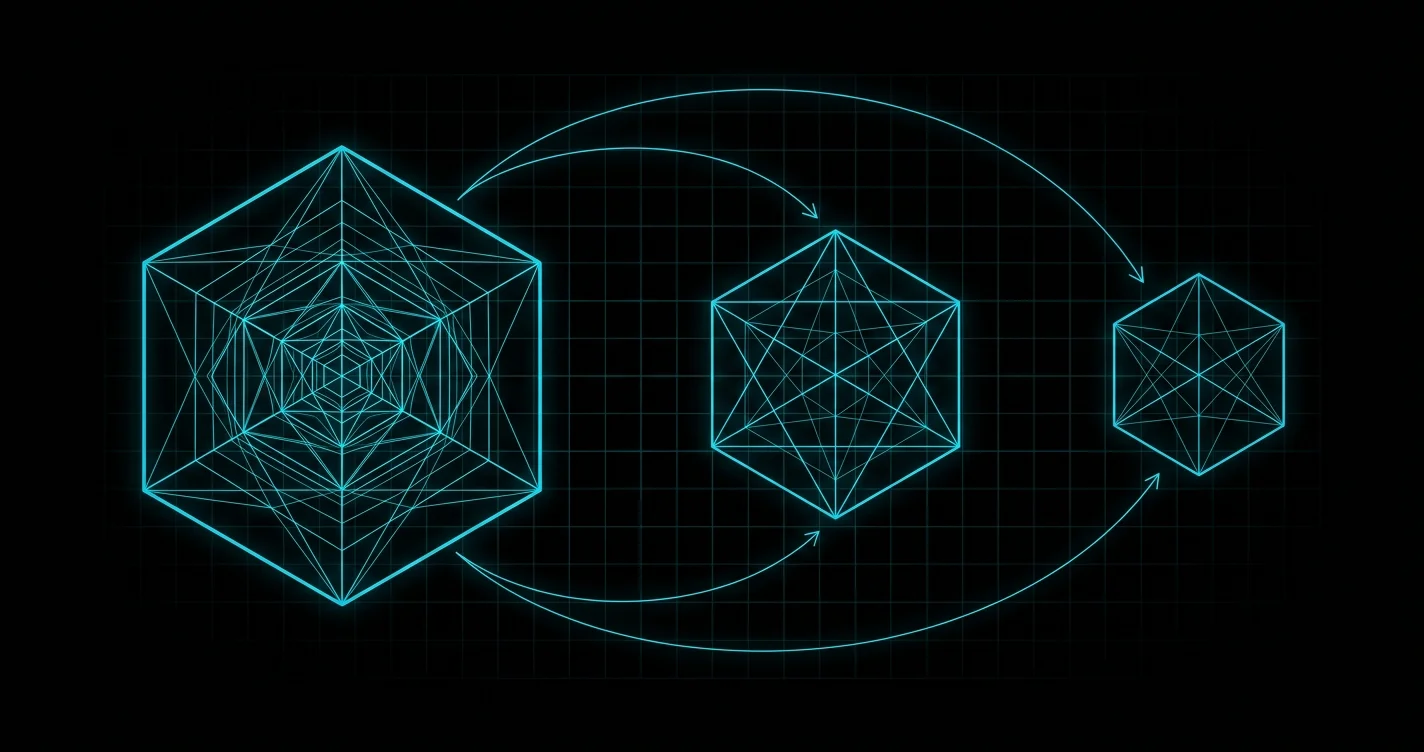
Builder Nick Saraev calls it 'spikiness.' Picture a Claude model as a video-game character. Its stat sheet does not look like a hexagon with even points all around. It looks like a warlock who maxed out one or two skills and dumped the rest. Opus can read six words of translated Russian and work out three things at once. That the speaker is Russian, that the source language was Russian, and that the text was translated. That is superhuman. The same model will sometimes write a joke that lands like a wet sock.
We are measuring AI on completely different yardsticks. The dick-measuring contest in the labs is about coding and high-end mathematics. The pushback from everyone else is about humor, empathy, and writing voice. Both groups are right about the model in front of them. They are looking at different spikes.
Picking the biggest model is also the most expensive way to be wrong
Fable 5.1 is 5x the price of Sonnet 5 and 10x the price of Haiku per token, and Opus 5 sits at 2.5x Sonnet. In one spring 2026 test, asking Opus a basic 'what are your business hours' question cost 21 times more than asking Haiku the same thing. Sonnet alone cost 2.8 times more than Haiku, and none of the three answers were actually different. You paid the Opus tax to confirm what Haiku already knew.
Anthropic API pricing (per million tokens)
| Model | Input cost | Output cost | Relative to Haiku |
|---|---|---|---|
| Fable 5.1 | $10.00 | $50.00 | ~10x |
| Opus 5 | $5.00 | $25.00 | ~5x |
| Sonnet 5 | $2.00 | $10.00 | ~2x |
| Haiku 4.5 | $1.00 | $5.00 | 1x (baseline) |
Each row is one Claude model. Input cost and output cost are in dollars per million tokens. Relative to Haiku compares each price with Haiku 4.5.
What Anthropic just admitted with the Advisor Strategy
On April 9, 2026, Anthropic released the Advisor Strategy. It is an API feature that pairs Opus as an 'advisor' with a cheaper 'executor' model like Sonnet or Haiku. Sonnet does the work. When it hits a choice it cannot reasonably solve, it pings Opus for help, then keeps going. Opus sees the same context but never makes tool calls itself.
The mechanics matter less than the message. By shipping this feature, Anthropic is saying out loud what the best AI builders have known for a year. Their own priciest model is not always the right tool. The cheaper models are good enough for most steps of most tasks. The expensive one earns its keep only at the hard moments.
What the numbers show
Sonnet 4.6 with Opus as advisor scored 74.8% on SWE-bench, versus 72.1% for Sonnet alone. The advisor pair cost about $0.96 per agentic task, versus almost $19 for Opus on its own.
Haiku with Opus as advisor scored 41.2% on BrowseComp. That is more than double Haiku's solo score of 19.7%. It is still cheaper than Opus on its own.
On Terminal-Bench, Sonnet plus Opus scored 60.4% versus 58.1% for Sonnet alone. Again, cheaper than Sonnet's normal cost.
What this means in plain English
Anthropic just shipped a product whose whole pitch is this. 'Stop using one model. Use two, layered, with the expensive one as a consultant.' That is one model away from the case for multi-model verification. And that is what TrueStandard does for writers and content teams who cannot run their own agentic workflows. For the design gap between agent teams (multi-agent) and cross-lab checking (multi-model), see our multi-agent vs multi-model breakdown.
The Claude model lineup, decoded for non-engineers
Claude in late 2026 has four tiers you can ship on. Each one has its own character and its own cost. None of them is 'the best.'
Claude Fable 5.1 The frontier
Fable 5.1 sits above Opus, the model for the hardest reasoning and the longest agentic runs. It costs 10 dollars per million input tokens and 50 per million output. We measured it on 3 September 2026, and it made up 2 of the 144 DOIs it offered across three runs, against 3 of 137 for the Fable 5 it replaced. Fisher exact p = 0.68 between them, a test for whether a small gap is real. The best model Anthropic sells still invents a citation.
Claude Opus 5 The deep thinker
Opus is the model Anthropic reaches for when it wants to show what is possible below the Fable tier. It is the strongest at multi-step reasoning, hard problems, and working things out from thin evidence. It is also slow and pricey, and on most everyday writing tasks it gives you output that is the same as Sonnet in practice. Reach for Opus when you have a truly hard problem that has to be reasoned about, not just answered.
Claude Sonnet 5 The default workhorse
Sonnet is the model you should reach for by default. It is fast and able, and it costs less than half of Opus. And it handles 80% of writing and editing tasks at a quality you cannot tell from Opus in a blind read. Sonnet is also the model Anthropic itself uses as the executor in the Advisor Strategy. That tells you how it views Sonnet's real role in production.
Claude Haiku 4.5 The fast specialist
Haiku is the cheapest and fastest model in the line-up. People wave it off as the least able of the three. That is a mistake. Haiku is built for narrow, clear work where speed and cost matter more than depth. Say a content team runs Haiku in the background to sum up transcripts or pull quotes from interviews. For that, it is the best tool in the box.
A real example: how the same question costs 21x more depending on the model
Builder Nate Herk ran a public test, sending the same simple support question, 'What are your business hours?', to all three models. The knowledge base had no business-hours entry, and here is what happened.
Searched the knowledge base, returned a clean, correct answer, at a cost of ~$0.06 per request.
The same answer as Haiku, in a slightly more polished tone, with emoji, at a cost of ~$0.17 per request, 2.8x more than Haiku.
The same answer as Haiku, but it also opened a support ticket. Arguably more useful for a customer, at a cost of ~$1.26 per request, 21x more than Haiku.
What this means for writers and content teams
Say you use Claude through the chat window for writing tasks. Then you are running this exact test dozens of times a day, and most of your queries are 'business hours' questions. Sonnet would answer them just as well as Opus, for a third of the wait and a fifth of the cost. The trick is knowing which queries are the truly hard ones. That is a verification question.
How writers, journalists, and B2B content teams should actually pick
The advice from AI builders is mostly tuned for engineering tasks. Here is the same advice put in the terms of people who write words for a living.
Common content tasks, mapped to models
Sonnet handles shape, voice, and length targets, and Opus is overkill and slower.
Editing is pattern spotting, not deep reasoning, and Sonnet is great here.
Sonnet will catch most plain errors. The ones left are what multi-model checking is built for.
Opus reasons with more care, but it is still wrong often enough that you should not publish on its word alone.
A pulling-together task that gains from speed and breadth more than depth.
Sonnet can handle million-token documents with little quality drop when summing up.
Voice is style copying, which Sonnet does as well as Opus.
Cheap, fast, and well suited to tasks where you want many wide-ranging tries.
This is the real job Opus was built for. Use it here.
Notice the pattern. Most writing tasks belong to Sonnet, and a handful need a second opinion: fact-checking, contested claims, anything you would not want to publish on one model's word. Those are what we built TrueStandard for. Paste your draft, and four to five models from different labs check the claims at once. You see every place they disagree, in 60 seconds, before your readers do.
If you are new to AI at work and trying to upskill
More and more office workers are told by a manager to 'figure out AI' and left there. They get no steer on which model to use, none on how to judge output, or what to do when the answer feels wrong. If that is you, here is the short version.
A simple starting protocol
Default to Sonnet 5 for everything
Use Sonnet until you have a clear reason to switch. It will handle most of your daily tasks, costs a fraction of Opus, and runs faster. You can change later.
Use Haiku for repetitive, mechanical work
Say you are doing the same thing 50 times: pulling names from emails, sorting support tickets, summing up meeting notes. Switch to Haiku, which is built for volume.
Reach for Opus only when you can articulate why
Try to finish this sentence: 'I need Opus instead of Sonnet because…' If you cannot, you do not need Opus. Save it for the moments when the reasoning really matters.
Never publish on a single model's word
Here is what most guides skip. Even Fable 5.1 is wrong often enough that publishing its output with no second opinion is a risk you carry. You don't need a smarter model. You need more than one. That is what TrueStandard does for writers and B2B teams. Paste your draft, four to five models check it at once, every disagreement shown in 60 seconds.
Decision framework: which Claude model for which task
If you remember nothing else from this guide, remember this table.
| If your task is... | Use... | Because... |
|---|---|---|
| Drafting from a brief | Sonnet 5 | Fast, able, 1/5 the Fable price |
| Editing existing copy | Sonnet 5 | Pattern spotting is Sonnet's strength |
| Summarizing long documents | Sonnet 5 | Strong on long context, fast |
| Generating headline options | Haiku 4.5 | Cheap and fast, scales with volume |
| Extracting structured data | Haiku 4.5 | Built for narrow, repeatable work |
| Fact-checking claims | Opus 5, then verify | Reasoning matters here, but one model is not enough |
| Original analysis on hard topics | Opus 5 | This is the job Opus was built for |
| Legal or regulated language | Opus 5, then verify | The cost of an error is too high for one-model output |
Three rows say 'then verify.' For those tasks, picking the right model is half the work. The other half is the part one model's output cannot solve on its own. That is the part TrueStandard does for you. Four to five models run the same check at once, in 60 seconds, with every disagreement flagged.
Which Claude model is the most accurate?
There is no single most accurate Claude model; accuracy depends on the task. Fable 5.1 and Opus 5 lead on hard reasoning and long, subtle work. Sonnet and Haiku can match or beat them on narrow, well-scoped jobs where speed and cost matter more than depth. Benchmarks rank general skill. They do not rank whether a model got the claims in your draft right.
And every Claude model still hallucinates, just like every frontier model from every lab. Our own September 2026 run put Fable 5.1 at 1.4 percent invented DOIs. That is low, and it is not zero. It will state a made-up number, citation, or quote in the same confident voice it uses for a right one. A stronger model lowers the odds of an error. It does not remove them. There is no setting for 'never wrong.'
So the accurate choice is not really a model. It is a process. Draft with whichever Claude model fits the task. Then check the claims against models trained apart, before you publish. That is the gap between a capable answer and a checked one. And it is exactly where model choice stops helping.
Why picking the right Claude model is not enough
Here is what the YouTube tutorials skip. You have picked the right model for the task, and you are still publishing on the word of one AI. And one AI is wrong often enough to embarrass you. Even Fable 5.1. Even with thinking always on. Even at 1 million tokens of context.
Outside benchmarks put hallucination rates for frontier models in the 17 to 34 percent range on factual claims. That is the average across easy and hard questions. For high-stakes claims, the kind a journalist files or a B2B team publishes, the rate is higher. Waiting for a smarter model won't fix this. The fix is the same one Anthropic just shipped for engineers in the Advisor Strategy. Do not trust one model for one answer.
Anthropic built the Advisor Strategy for developers running agents. TrueStandard built the same idea for the people who publish words. You paste your draft, and four to five different models check the claims at once. Where they all agree, you can publish with confidence. Where they disagree, you know exactly what to check before your readers do.
Frequently Asked Questions
Which Claude model is best for writing in 2026?
For most writing tasks, Claude Sonnet 5 is the best choice. It handles drafting, editing, summing up, and voice rewrites at a quality you can barely tell from Opus, at less than half the cost. Reach for Opus 5 only when the task needs truly hard reasoning: fact-checking technical claims, say, or reading evidence that clashes. Use Haiku 4.5 for repeat batch tasks like headline writing or transcript cleanup.
What is Anthropic's Advisor Strategy?
The Advisor Strategy is an Anthropic API feature released in April 2026. It pairs Opus as an advisor with Sonnet or Haiku as an executor. The cheaper model handles most of the work. When it hits a choice it cannot reasonably solve, it asks Opus, then keeps going. In Anthropic's own benchmarks, Sonnet plus Opus advisor scored higher on coding tasks at one-twentieth the cost of Opus alone. The feature matters because it is Anthropic admitting that no single model is the right tool for any real task.
Should I use Claude Opus or Sonnet for fact-checking?
Opus 5 reasons with more care on contested or technical claims, so it is the better pick if you must choose one model for fact-checking. But the bigger answer is that one model is not enough for fact-checking work that will be published. Outside benchmarks put hallucination rates for frontier AI models, including Opus, in the 17 to 34 percent range on factual claims. The right path is multi-model verification, where four or five models check the same claims at once and you focus on the disagreements.
Is Claude better than ChatGPT for journalism and writing?
Claude is widely held to be the strongest model for long-form writing, voice control, and hard editing tasks. ChatGPT stays stronger for tools like image making, voice mode, and live web search. Most working writers use both: Claude for drafting and editing, ChatGPT for research and assets. Neither is safe enough on its own for fact-checking you can publish, which is the gap multi-model verification fills.
How much does Claude Opus cost compared to Sonnet and Haiku?
On the Anthropic API, Fable 5.1 costs $10 per million input tokens and $50 per million output tokens. Opus 5 costs $5 per million input and $25 per million output. Sonnet 5 costs $2 per million input and $10 per million output. Haiku 4.5 costs $1 per million input and $5 per million output. In practice, Opus is 2.5x pricier than Sonnet and 5x pricier than Haiku per token. Fable doubles Opus again. Subscription users on Claude Max plans pay a flat fee, but they burn through their session limit faster on Opus and Fable.
Can I use multiple Claude models at the same time?
Yes. Anthropic's own Advisor Strategy pairs Opus and Sonnet for you. Tools like TrueStandard go further, running your content through four or five different AI models from different labs at once and showing the agreements and disagreements. This is the approach working writers and B2B content teams increasingly use to fact-check AI-assisted work before publishing.
Why do AI models give different answers to the same question?
Different AI models are trained on different data, with different goals, and tuned to different ends. Even inside one lab, Fable and Sonnet will sometimes split on the same question. This is not a bug. Disagreement between models is the best signal that a claim needs a human look. A single confident answer from a single model tells you nothing about whether it is right. Five models agreeing tells you a lot.
How do I verify AI-generated content for accuracy before publishing?
Checking by hand, Googling each claim, takes the better part of an hour per article, and it still misses small errors. The faster, safer path is to run the draft through several AI models at once and focus on the claims where they disagree. TrueStandard does this in 60 seconds across four to five models. It shows every claim where the models split, and flags exactly what to check on your own. It sits beside your current AI workflow rather than replacing it.
Which Claude model is the most accurate?
There is no single most accurate Claude model; accuracy varies by task. Fable 5.1 and Opus 5 are strongest on hard reasoning, while Sonnet and Haiku can match them on narrow, well-scoped work. But none is hallucination-free: every Claude model can state a made-up fact or citation in a confident voice. So the safe path is not choosing one model. It is checking your draft's claims across several models trained apart, before publishing.
Keep reading
Is There a Most Accurate AI Model?
The honest answer is no. The ranking changes with the task, the benchmark, and the month, and even the leader still hallucinates.
Does Grok 4.5 Fabricate Fewer Citations Than 4.3?
Grok 4.5 shipped on 8 July, and our benchmark ran three weeks later. It tested Grok 4.3, so the number we published was already a generation stale. We fixed that: both models went through the same 30 claims on the same day, and the rate dropped from 11.1% to 4.4%. Here is why we are not calling that a win.
Does GPT-5.6 Fabricate Fewer Citations Than GPT-5.5?
We asked both generations for peer-reviewed sources on the same 30 claims, on the same day. We resolved each DOI they produced against a real registry. GPT-5.6 came out lower. Then we noticed something in the data that matters more than which model won.
Does Claude Fable 5 Hallucinate Less?
It leads AA-Omniscience with a score of 40 — the highest recorded. Artificial Analysis says that score comes from accuracy, not from low hallucination. And 9% of its answers came from a different model.
TrueStandard vs FactCheckTool
These two tools look alike, but they solve opposite problems. One tells you if the media you read is fake. The other tells you if the draft you are about to publish is true.
What we measured on this model
Each release page carries our own fabrication data for one model version, measured against the model it replaced in the same vendor's line.
Stop Picking Models. Start Verifying Them.
Anthropic just admitted that no single Claude model is the right tool. Pasting your draft into one model and hoping it caught everything is the same mistake, one size down. TrueStandard runs your content through four to five models in 60 seconds, and flags every claim where they disagree.
TrueStandard is for writers who publish AI-assisted drafts. Paid plans check every claim and citation across four AI models before you hit publish.
Free: one check a day, no signup. Pro is $20 a month for 250 drafts.
Start Verifying →