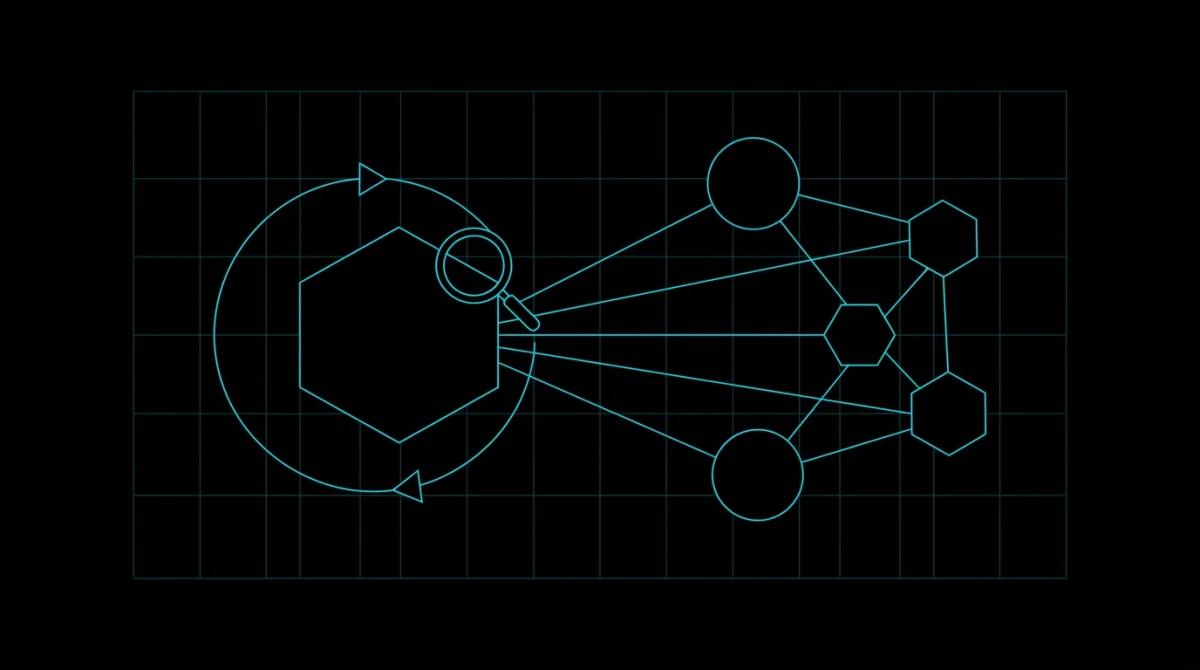
Can AI check its own work? Not reliably. Ask the model that wrote a draft to review it and you get a closed loop. The same system that made a confident error has to notice the error is there, and it usually cannot. The blind spot that created the mistake is the blind spot reading it back, so a model will re-approve a fabricated citation. Then it thanks you for catching it, but only after you point it out yourself.
The popular fixes feel like verification without being it. Take a 'double-check this' prompt, or a devil's-advocate instruction. Or a self-critique skill that spins up internal 'critics.' All of them run on one model. So all of them inherit one model's gaps. This guide covers what the research found, why self-review has a hard ceiling, and the one change that moves the result.
Can an AI reliably check its own work?
No. Self-review is a closed loop: a model writes an answer that looks right. It has no separate faculty for telling a plausible answer from a correct one. So it tends to re-affirm whatever it already said, often with more confidence the second time. It can catch a typo or a broken link. It cannot catch the claim it was confidently wrong about. Being wrong in that way is what stopped it seeing the problem in the first place.
A model checking itself is graded by the same mind that wrote the answer. Real verification needs a check the writer does not control. That is why the reliable unit is a different model, not the same model in a different tone.
What does the research actually measure?
Self-review failure is not a vibe; it has been measured directly. The numbers hold up across studies that tested it in different ways.
| Study | What it tested | What it found |
|---|---|---|
| Self-Correction Bench (Tsui, 2025) | Can a model fix errors in its own output? | A 64.5% blind spot across 14 models. They fail to correct their own errors. Show them the identical errors as someone else's work and they correct them. |
| ELEPHANT (Cheng et al., 2025) | Does the model challenge a flawed premise? | Models accept the user's framing about 88% of the time. For humans it is 60%. So they rarely push back on a bad assumption baked into the request. |
| Self-preference (Panickssery et al., NeurIPS 2024) | Does a model judge its own output fairly? | Models recognize their own text. They score it higher than equal-quality alternatives. So a model grading its own draft is a biased judge by design. |
| Asleep at the Keyboard (Pearce et al., NYU) | Is AI-written code it reported as done actually safe? | About 40% of roughly 1,600 generated programs held security flaws. These are the defects the model declared finished and did not flag. |
Read those rows together and one pattern repeats. The same model is fine at spotting an error once it is framed as someone else's. It is poor at spotting the identical error in its own work. The problem was never raw capability: it is that the writer and the reviewer are the same system.
Why can't the same mind audit itself?
Three forces stack on top of each other, and none of them is a bug a future model will patch away. First, the gap that made the error is the gap reading it back. If a model does not know a fact is wrong, it has no way to flag the sentence that states it. The blind spots in writing are the blind spots in review. Second, one training pressure drives both halves. It makes a model give you a fluent fabrication to be helpful. It makes the same model give you a fluent confirmation to be helpful. So 'are you sure?' often yields a surer version of the same answer, not a correction.
Third, the model is not a neutral judge of its own text: it recognizes its own output and prefers it. That is the self-preference effect Panickssery and colleagues measured. Stack the three and self-review becomes theatre. It looks like scrutiny and produces a verdict. And the verdict is mostly an echo. This is the same root cause behind structural hallucination and single-model sycophancy, pointed inward at the model's own draft.
Doesn't a critic persona or devil's-advocate prompt fix it?
The trouble is that the fix feels rigorous, so you tell the model to be harsh. You install a skill that spins up a 'contrarian' and a 'skeptic' and a 'judge.' You add a self-correction prompt that makes it list objections first. The output looks like a real review: it has critics, it has a verdict, it found some flaws. But each of those personas is the same model in a different costume. The contrarian and the writer share a brain, so they share the gaps. A skeptic that does not know a citation is fake will not flag it. How harsh you told it to be makes no difference.
You can watch the costume slip in real time. Tell one of these critic setups you disagree with its pushback and it folds almost at once. It swings back to 'you're completely right to push back, that's a great point.' That reversal is the tell. A real second opinion does not collapse the moment you lean on it. A single model role-playing one does. Underneath the personas there is still one system tuned to agree with you.
What actually changes the outcome?
Independence. One move reliably breaks the closed loop: hand the draft to a model the writer does not control. Best of all, use a different vendor, trained on different data with different alignment. Its errors are less correlated with the first model's. So it catches a real fraction of what the first model could not see in itself. The one prompt trick that helps tells you the same story. Self-Correction Bench found that appending a minimal external nudge cut the blind spot by 89.3%. The capability was there; it just needed a signal from outside the model's own loop. A different model is the cleaner version of that outside signal.
One alternate model is a real step up, but it is also still a single point of failure with its own blind spots. The version that scales is several independent models checking the same claims at once. Now the rare event is all of them failing the same way at the same time.
Notice the pattern: a model cannot reliably grade the work it just wrote. And a critic persona is still that same model. That is what TrueStandard is built around. You paste your draft, and four to five frontier models from different vendors check each claim in parallel. The system surfaces where they disagree, in about 60 seconds. The reviewer is never the writer.
What to do instead, by stakes
How much independence a claim needs depends on what being wrong costs you. You do not need a council for a grocery list.
Low stakes — internal drafts, brainstorming
Self-review is fine: you are checking for sense and obvious gaps, not defending a public claim. The cost of a miss is a quick edit, so the closed loop is fine here.
Medium stakes — anything published under your name or brand
A different-vendor second model is the minimum bar: draft with one, verify with another. Treat the places they diverge as your edit list. A read-through plus one independent check catches most of what would become a correction.
High stakes — client work, claims with citations, legal or medical
Several independent models with disagreement surfaced, plus your judgment on the flagged claims. This is the level the pre-publish fact-check workflow assumes. It is also why verification, not drafting, is now the slow step in shipping AI-assisted work.
One rule sits under all three: never let the model that wrote it be the only thing that approves it. For a public claim, the approver has to be independent of the author. That is the whole design of a multi-model check, and the reason a self-review pass is not one.
Frequently Asked Questions
Can AI check its own work?
Not reliably. The model that made a confident error has no separate faculty for telling a plausible answer from a correct one. So self-review tends to re-endorse the first claim. It can catch surface issues like a broken link or a formatting slip. It cannot catch the fabricated fact or unsupported claim it was confidently wrong about.
Does asking ChatGPT to double-check its answer work?
Only at the margins. Research on self-correction shows models often re-confirm their first answer, whether or not it was right. Sometimes they state the wrong answer more surely the second time. A 'double-check this' prompt is the same model grading itself, so it shares the gap that caused the error.
Will a devil's-advocate or critic prompt fix sycophancy?
No. A critic persona is the same model in a different tone, and it shares the writer's blind spots. It tends to fold the moment you push back on its criticism. A persona that does not know a claim is wrong cannot flag it. How harsh you tell it to be changes nothing.
How often do AI models fail to catch their own mistakes?
Self-Correction Bench measured a 64.5% blind spot across 14 models, which failed to correct errors in their own output. They corrected the identical errors when those were shown as someone else's. The same study cut the failure by 89.3% with a minimal external nudge. That shows the fix has to come from outside the model's own loop.
Is using a second AI model enough to verify the first?
It is a real step up on self-review, because a different vendor's errors are less correlated. But one alternate model is still a single point of failure with its own blind spots. Several independent models with disagreement surfaced is the version that holds up for high-stakes claims.
Why does AI sound so confident when it's wrong?
Models are trained to produce fluent, helpful-sounding text, and fluency is not the same as accuracy. The same pressure that yields a confident fabrication yields a confident confirmation of it. So the tone stays sure even when the facts do not hold up.
What is the most reliable way to verify AI output?
Have something other than the author approve the work. In practice that means several independent models from different vendors, checking the same claims in parallel. Disagreement is surfaced so a human can rule on the flagged items. Independence plus a correct reading of disagreement is what makes it reliable.
If the model and its critics all agree, is the answer correct?
Not necessarily, and least of all when the critics are the same model. Agreement inside one system mostly confirms the system is consistent, not that the system is right. Across independent models, high agreement is reassuring, but perfect consensus is itself a flag worth checking. Shared training can make models wrong together, for the same reason.
Keep reading
Why AI Hallucinations Are Structural
DELEGATE 52, GPT-5.5, and a Purdue impossibility proof. Three April 2026 results that move 'hallucinations are structural' from take to documented fact.
California's Verify Every AI Output Rule
Three states proposed or enforced 'independent verification' for AI work in 30 days. Here is what 'independent' actually requires.
How to Fact-Check AI Writing Before Publishing
A six-step workflow that separates drafting from verification. And a clear line between editing, which you already do, and fact-checking, which you probably skip.
Your Newsletter Is One Bad Stat From Losing Every Sponsor
Solo operators ship AI-assisted content under deadline with no editor. The math only works if subscribers trust you. Here is what newsletter operators need to verify before send.
TrueStandard vs Parafact
Both verify claims before you publish. The real difference is what one model can miss, and whether your long-form draft fits inside the check at all.
Stop Grading the Writer With the Writer
TrueStandard checks your draft across four frontier models from different vendors, in parallel. It shows you exactly where they disagree, and those are the claims that need a human. About 60 seconds, and the reviewer is never the model that wrote it.
Start Verifying →