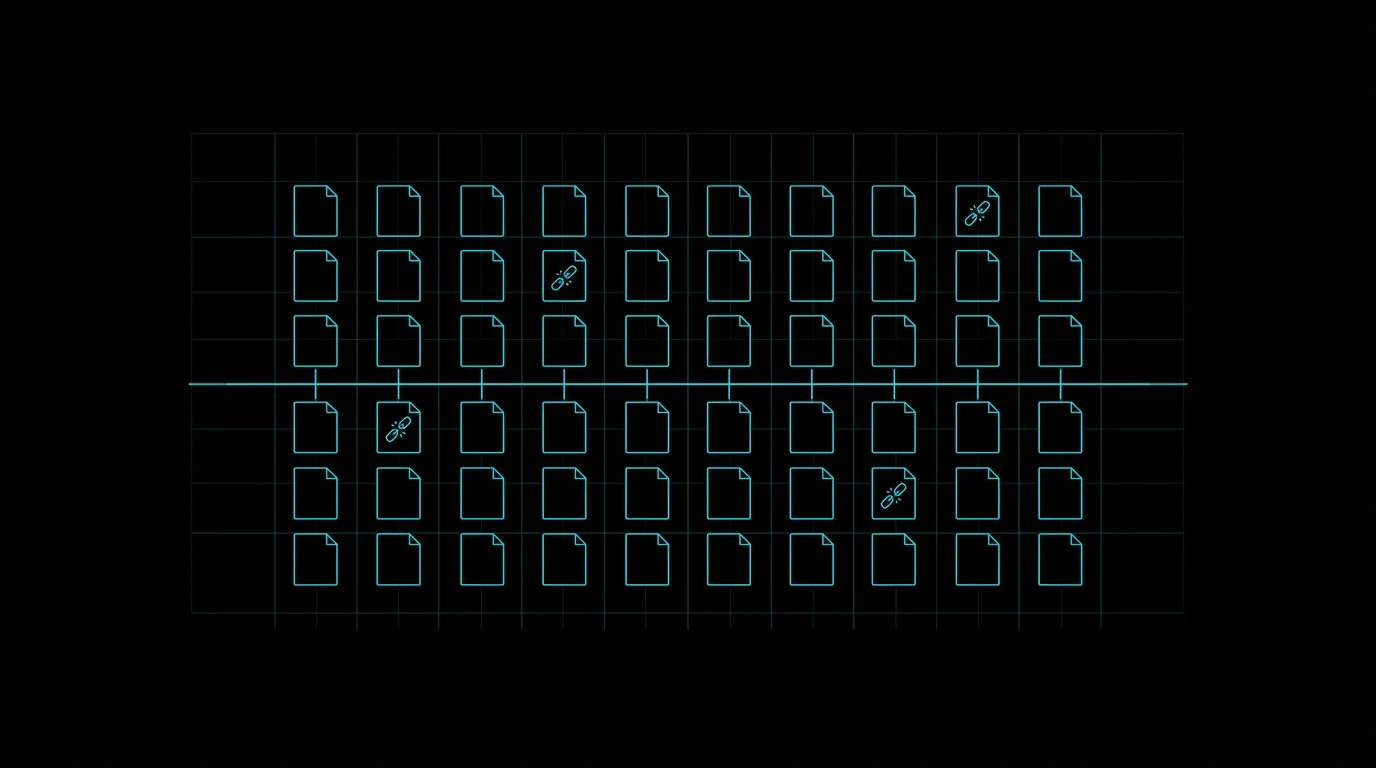
AI fake-citation disasters are now documented across law, academia, and media. Lawyers have been sanctioned, and nearly 3,000 peer-reviewed medical papers carry invented references. This page is a running, sourced list of the cases we verified. Each entry shows how the failure happens, and how it slips past review.
It exists because the problem has moved from anecdote to pattern, and at that point a list beats one more warning. Do you want the mechanism behind these cases, and a way to catch a fake source? Start with the companion post on when AI cites studies that don't exist. Every figure below traces to a primary or top-tier source.
Legal: fabricated case law
Courts were the first place the failure showed up at scale. A fake citation in a filing is easy to make, and just as easy for the other side to expose. The result is a fast-growing public record of sanctions.
Documented legal cases
| Case | Where | What the AI made up | Outcome | Year |
|---|---|---|---|---|
| Mata v. Avianca | US (SDNY) | Six nonexistent cases, including Varghese v. China Southern Airlines | $5,000 sanction; global headlines | 2023 |
| Sullivan & Cromwell filing | US (Bankruptcy, SDNY) | ~28 fabricated or misquoted citations | Apology to a federal judge; red-lined correction | 2026 |
| Cork v Smith | UK (High Court) | A nonexistent statute, Insolvency Rule 12.37(5) | Judge: solicitor 'almost entirely outsourced the thinking' | 2026 |
| Ayinde / Al-Haroun | UK (High Court) | Fake case citations in two filings | Warning of sanctions up to contempt and police referral | 2025 |
| Nippon Life v. OpenAI | US (N.D. Ill.) | 21 AI-drafted motions to reopen a settled case | First unauthorized-practice suit against an AI maker; ~$300K in fees | 2026 |
Sources: Mata v. Avianca opinion (2023); Bloomberg Law and CNN on Sullivan & Cromwell (April 2026); UK judgments in Cork v Smith [2026] EWHC 1199 (Ch) and Ayinde v Haringey (2025); ABA Journal on Nippon Life v. OpenAI (March 2026).
These are not the whole picture; they are the ones that made news. Researcher Damien Charlotin keeps a public database of court rulings that deal with AI-hallucinated content. By mid-2026 it had logged more than 1,600 cases worldwide, still climbing almost daily. A 2026 Stanford-led benchmark separately counted over 1,000 court filings with fake citations. That count is rising year over year (Who Checks the Citations?). The Sullivan and Cromwell case carries the lesson that should worry every lawyer. This is a firm whose review standards are the envy of the industry. It still shipped hallucinated citations, so the problem is not care: normal review does not catch this specific failure.
Academic: fake references in published science
The quieter, larger version of the problem sits in the science journals. There, a fake citation can clear peer review, then stays in a published paper for good. Reviewers were never checking whether each reference exists.
Documented academic findings
| Source | What it found | Year |
|---|---|---|
| Columbia / The Lancet audit | 4,046 fabricated citations across 2,810 papers, out of 2.5 million audited | 2026 |
| Nature investigation | Estimated 110,000+ papers from 2025 with invalid AI references | 2026 |
| Walters & Wilder (Scientific Reports) | GPT-3.5 fabricated 55% of citations; GPT-4, 18% | 2023 |
| Bhattacharyya et al. (Cureus) | 47% of GPT-3.5 medical references fully fabricated | 2023 |
| arXiv CS policy change | Review and position papers must clear peer review first, a response to an AI-driven flood | 2025 |
Sources: Columbia School of Nursing; Nature; Scientific Reports; Cureus; arXiv.
Two things stand out. The Columbia audit found the fake-citation rate rising more than twelvefold since 2023. The sharpest jump began in mid-2024, just when AI writing tools went mainstream. And the Nature figure, 110,000 papers, is an extrapolation, not a hand count. Journalists checked the 100 most suspicious papers in a sample and confirmed invalid references in 65 of them. They then projected that across the roughly 7 million papers published in 2025. The estimate is rough by design, but the direction is not in doubt. Fake citations have entered the permanent record of science.
Media: AI content that went to print
The version that hits the widest audience is publishing. There, AI-written or AI-sourced content reaches readers, with a masthead standing behind it.
Documented media cases
| Outlet or study | What happened | Year |
|---|---|---|
| CNET | Corrected 41 of 77 AI-written finance articles after factual errors and lifted phrasing | 2023 |
| Sports Illustrated | Published reviews under fake AI-generated author names and headshots | 2023 |
| Columbia Journalism Review / Tow Center | 8 AI search engines answered 60%+ of news-sourcing queries incorrectly | 2025 |
Sources: CNN on CNET; Futurism on Sports Illustrated; Columbia Journalism Review.
CNET is the cleanest warning for anyone who publishes. A respected outlet quietly used AI for finance explainers, and more than half of them needed corrections. Some were substantial, including a compound-interest example that was simply wrong. The Tow Center study adds the scale: eight AI search tools were asked to name the source of a real news excerpt. They were wrong more than 60 percent of the time, from 37 percent for the best to 94 percent for the worst. They were also sure of themselves, and often cited fake or broken links. The Sports Illustrated case is a slightly different failure: what was fake there was the authors, not the facts. It belongs here for the same reason. AI-written material reached print with no outside check between the tool and the reader.
The common thread
Line these cases up and the same shape appears in each one. The setting makes no difference, whether it is a courtroom, a journal, or a newsroom.
One model produced the citation, and a human trusted it because it looked right. And no second check stood between the draft and the audience. That is the whole failure, repeated at different stakes. A newer model does not solve it: fake-citation rates do not reliably fall with each release. Retrieval alone does not solve it either. Even grounded tools sold to end hallucination still made up sources 17 to 33 percent of the time in Stanford's testing. There is a deeper reason these slipped through. An AI is just as fluent when it is wrong as when it is right, so confidence gives the reader no signal. That is the trap we unpack in why AI is confidently wrong.
Every case on this page is missing the same piece: no second, independent opinion before it went out. That is the gap TrueStandard is built to close. It does not trust one model to vouch for itself, and runs a draft across four to five frontier models from different labs at once. If only one of them knows a citation, only that model invented it. The others cannot confirm it.
How not to become an entry on this list
The cases share a failure, and they also share a fix. Not one of them would have made this list if a single outside check had happened before it was published.
The habit is simple to state: treat each AI-written citation as a claim to check. Then check two things, not one. Does the source exist? And does it really say what the draft claims? Confirming only that a link opens is what lets misrepresented and misquoted sources through, and those are most of the failures. For one high-stakes citation, trace it to the primary source by hand. For a whole draft, use independence at scale: run the claims across several models trained by different labs, then look at what they disagree on. A fake source cannot be backed up by models that never shared the hallucination. Our guides on checking whether AI citations are fake and fact-checking AI writing before publishing walk through both versions. The companion post on why AI cites studies that don't exist explains the mechanism in full.
TrueStandard automates the independent check. Paste your draft. Four to five frontier models from different vendors check each claim and citation at once. In about 60 seconds you get back the ones they cannot agree on, exactly the ones worth confirming before you publish.
Frequently Asked Questions
What is the most famous AI fake-citation case?
Mata v. Avianca (2023) is the landmark. A New York lawyer used ChatGPT to write a court brief that cited six cases which did not exist, including a made-up Varghese v. China Southern Airlines. The judge sanctioned the lawyers and their firm $5,000, in the first case to make AI fake citations a global news story. It is still the reference point for every one since.
How many AI hallucination cases have there been?
In law alone, one public database had logged more than 1,600 court cases worldwide by mid-2026. Researcher Damien Charlotin keeps it, it tracks AI-hallucinated content, and the count grows almost daily. A separate 2026 benchmark counted over 1,000 US court filings with fake citations. Those are only the cases that reached a court record, and the true number across all writing is far higher.
Have fake AI citations actually caused harm?
Yes. Lawyers have been sanctioned and fined, and an elite firm had to apologize to a federal judge. Nearly 3,000 peer-reviewed medical papers were found to carry made-up references that exist in no database. In media, CNET had to correct more than half of a batch of AI-written finance articles. The harm runs from red faces to corrupted records in science and finance.
Do fabricated citations get past peer review?
Regularly. A Columbia University audit published in The Lancet found 4,046 fake citations across 2,810 published, peer-reviewed papers. Peer review was never built to check that each reference exists. The rate rose more than twelvefold after AI writing tools went mainstream in 2024. Most of those papers had no correction at the time of the audit.
Which is worse, a fake source or a misused real one?
The misused real source is usually harder to catch. A fully invented citation fails the moment you look for it. Now take a real source cited for a claim it does not support. Or a real DOI, the permanent id on a paper, that opens a paper on something else. Both pass a quick link check, and both show up only when someone reads the source. Studies have found roughly a third of AI citations misrepresent what the real source says. So checking the claim, not just the link, is what matters.
How do I avoid publishing a fake citation?
Check before you publish. Read the source instead of trusting that a link opens. Trace important citations to the primary source, and confirm it says what you are crediting it with. For volume, run the draft across several independent models and check where they disagree. A fake source cannot be backed up by models that did not share the hallucination. That is the single check that would have kept every case on this page off the list.
Keep reading
Why AI Hallucinations Are Structural
DELEGATE 52, GPT-5.5, and a Purdue impossibility proof. Three April 2026 results that move 'hallucinations are structural' from take to documented fact.
Can One AI Reliably Fact-Check Another AI?
If ChatGPT wrote the draft, can Claude safely verify it? Sometimes helpful, not sufficient by default. The reason is what these models share, not what they don't.
Why AI Can't Check Its Own Work
A model carries the same blind spots into review that it had while writing. Dressing it up as a critic is a costume, not a second mind.
What Is AI Sycophancy?
Your AI agrees with you too much. Anthropic's safeguards team explains why models tell you what you want to hear, and what you can do about it.
TrueStandard vs Omniscient AI
Both run several models, and both show where those models agree. The difference is the moment each one is built for. Omniscient checks what you are reading. TrueStandard checks what you are about to publish.
Don't End Up on This List.
Every case here shares one missing piece: no independent check before publishing. Paste your draft into TrueStandard. Four to five frontier models check each claim and citation in about 60 seconds, and flag the sources they cannot back up before anyone else sees them.
Check Your Draft →